

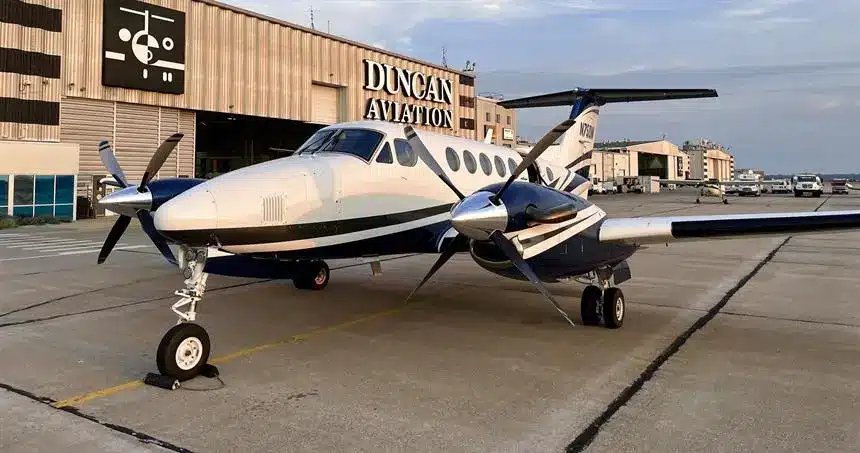
Turboprop
Charter.
Short runways, remote airstrips, and regional routes where jets cannot go. Turboprops get you there.
Request a QuoteThe aircraft that goes where jets stop.
Turboprops are propeller aircraft powered by turbine engines. They fly slower than jets but operate from runways that jets cannot use, which makes them the right tool for a specific set of missions that no other aircraft category can cover.
A turboprop can land on a 2,500-foot grass strip, a remote Caribbean airfield, a mountain resort runway, or a regional airport with no instrument approach. For travelers whose destination is on the other side of a short or unpaved runway, the turboprop is not a compromise. It is the only option.
On trips under two hours, the speed difference between a turboprop and a light jet becomes negligible once you factor in airport access. Shorter taxi, faster boarding, closer to your final destination. The math often works in favor of the turboprop.
At a Glance
4 aircraft. All available for charter.
Each model serves a different mission profile. Your advisor recommends the right one based on your route, group size, and destination airfield.
 Turboprop
King Air 90
Entry point of the King Air family. Twin PT6A engines, short-field access, and a compact cabin ideal for small groups on regional routes where runway length is a constraint.
Turboprop
King Air 200
The most requested turboprop in the fleet. Flat floor, seating for up to 9, generous baggage space, and a range approaching 1,600 nm. The benchmark turboprop for business and leisure regional travel.
 Turboprop
Pilatus PC-12
Swiss-built single-engine turboprop with the longest range in the category at 1,800 nm. Flat floor, large cargo door, and the ability to land on unpaved strips. The island-hopping specialist and the first choice for remote destination access.
 Utility Turboprop
Grand Caravan 208B
The utility workhorse. Up to 12 passengers, single PT6A engine, and the ability to operate from the shortest and most basic airstrips in the network. The standard choice for island hops and remote destination access where group size matters more than speed.
Turboprop comparison.
| Aircraft | Manufacturer | Passengers | Range | Engines | Flat Floor | Best For |
|---|---|---|---|---|---|---|
| King Air 90 | Beechcraft | 6 to 7 | ~1,300 nm | Twin | Yes | Short hops, small groups |
| King Air 200 | Beechcraft | 7 to 9 | ~1,580 nm | Twin | Yes | Regional business and leisure |
| Pilatus PC-12 | Pilatus | 6 to 9 | ~1,800 nm | Single | Yes | Remote access, island hops |
| Grand Caravan 208B | Cessna | 9 to 12 | ~1,070 nm | Single | No | Groups, unpaved strips |

The right call for the right mission.
Turboprops are not the default. They are the right choice when the destination, the budget, or the runway makes them the best option on the table.
-
01
The destination has a short or unpaved runway.
Many island airstrips, mountain resorts, and remote fields are simply inaccessible to jets. A turboprop lands where jets cannot.
-
02
The flight is under 90 minutes.
On very short routes the speed advantage of a light jet disappears when you factor in airport complexity and positioning time. A turboprop operating from a closer field often gets you there just as fast.
-
03
The group is large and the budget is regional.
The Grand Caravan carries up to 12 passengers at a cost structure that makes sense for groups where a jet would require two aircraft.
-
04
The itinerary involves multiple island hops.
Inter-island legs in the Bahamas, Caribbean, or Pacific are a natural fit for turboprops. The aircraft handles short runways, the economics work for short legs, and the Pilatus PC-12 covers up to 1,800 nm if the plan expands.
Looking for a different aircraft class?
Turboprop charter FAQ.
What is the difference between a turboprop and a jet?
A turboprop uses a turbine engine to turn a propeller, while a jet aircraft uses turbine engines to produce thrust directly. Turboprops cruise slower, around 260 to 330 mph versus 480 to 530 mph for light jets, but can operate from much shorter runways, sometimes under 2,500 feet. On trips under 500 miles where the destination has a short or regional airfield, a turboprop is often the better practical choice.
Which turboprop has the most range?
The Pilatus PC-12 leads the category at roughly 1,800 nautical miles. The King Air 200 follows at about 1,580 nm. The Grand Caravan 208B has the shortest range at around 1,070 nm, which still covers most regional and inter-island routes without a stop.
Can turboprops land on unpaved or grass runways?
Yes. The Pilatus PC-12 and Grand Caravan 208B are specifically designed for operations on unpaved surfaces. The King Air series handles short paved runways down to around 2,000 to 2,500 feet, which opens up most regional airports that jets cannot use. Your advisor confirms airfield suitability before any turboprop booking is finalized.
How many passengers can a turboprop carry?
It depends on the aircraft. The King Air 90 carries 6 to 7, the King Air 200 up to 9, the Pilatus PC-12 up to 9 in its passenger configuration, and the Grand Caravan 208B up to 12. The Grand Caravan is the highest-capacity option in the turboprop category and is often the right choice when group size makes the economics of a single aircraft work better than a smaller aircraft with multiple flights.
Is a turboprop comfortable for passengers?
The King Air 200 and Pilatus PC-12 both have flat-floor cabins with individual seats and enough headroom to move around without crouching. The ride is quieter than many people expect, though louder than a jet. On routes under two hours the difference is minimal. The Grand Caravan is more utilitarian and is best suited for short hops where access matters more than cabin comfort.
Are turboprops safe?
Yes. The King Air family in particular has one of the best safety records in aviation, with decades of operation across military, medical, and commercial missions worldwide. The Pilatus PC-12 is similarly regarded. All aircraft operated through Fly Tango Jets comply with FAA Part 135 safety standards. Your advisor can provide details on the operating carrier for any specific booking.
Can I bring luggage and sports equipment on a turboprop?
Yes, with some limits. The King Air 200 has the most generous baggage capacity in the category, handling full-size bags for all passengers. The Pilatus PC-12 has a large rear cargo door designed for oversized items. The King Air 90 has less baggage volume and works best when passengers travel light. Your advisor confirms specific baggage allowances based on the aircraft and passenger load for your trip.
When should I choose a turboprop over a light jet?
Choose a turboprop when your destination has a short or unpaved runway that jets cannot use, when the flight is under 90 minutes and airport access from a regional field saves time overall, when you are traveling with a larger group and the Grand Caravan fits the mission, or when the trip involves island hopping on short legs where the economics of a turboprop make more sense than a jet on each leg.
Not sure which turboprop fits your trip?
Tell your advisor the route, the destination airfield, and how many people. They will match the right aircraft and confirm availability for your dates.
Request a Quote